While “Less is more,” might not hold for a pan of gooey chocolate brownies, it does make sense for some of your recipes. Especially if you’re getting comments like:
“Can I halve this recipe?”
“What would the measurements be for just two people?”
“I’m cooking for one, help!”
These aren’t one-off asks. They’re a sign. And if you’ve been ignoring them (or answering the same halving question for the 47th time), there’s a reason this keeps happening.
Your readers’ households are shrinking. Your recipes? Probably aren’t.
The mismatch no one talks about
Single-person households now make up 29% of all American homes. That’s more than 37 million households. Add in two-person households (another 28-30%), and you’re looking at the majority of the people reading your blog. 🖥️
Yet almost every recipe on the internet defaults to serving four to six.
That’s a mismatch. And it’s frustrating your readers more than you might realize.
What “cooking for one” searches tell us
When someone searches “cooking for one” or “meals for two” (roughly 264,000 searches a month), they’re not just looking for dinner ideas. They’re frustrated.
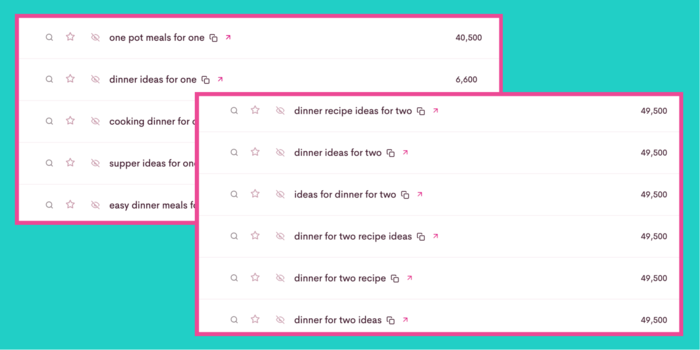
Their search intent breaks down into three overlapping needs:
- Immediate recipe discovery: What can I make tonight for just myself?
- Lifestyle validation: Am I the only one who struggles with this?
- Systems and tools: How do I stop wasting food and make cooking worthwhile?
That last one matters most for food bloggers.
Secondary keywords like “half recipe calculator” and “scaling recipes down” show that readers want tools that remove the math burden.
They’re looking for a solution, not just another recipe that assumes they’re feeding a crowd.
What stresses your single-serving searchers
Understanding what makes smaller-household cooking hard helps you connect with readers who might otherwise bounce.
The half-egg problem
“What the heck do I do with half an egg?” 🥚
This shows up all the time in recipe discussions. Halving sounds simple until you hit:
- Odd ingredient quantities (3 cloves of garlic becomes… 1.5?)
- Impractical measurements (⅛ teaspoon)
- Baking chemistry that doesn’t scale linearly
Many readers report avoiding recipes entirely because the mental math feels like too much.
The bunch of celery problem
A batch of chicken noodle soup calls for one stalk. Grocery stores sell entire bunches. The rest rots in the refrigerator.
Readers describe this as “throwing money directly in the trash.”
In fact, the average household wastes $1,500-2,000 in food annually. Small households are at risk to waste even more per person because recipes and packaging assume larger households.
Leftover fatigue is real
It’s easy for solo cooks to feel like they’re in a lose-lose situation. Batch cooking means eating the same meal for a week. But cooking fresh daily is exhausting.
“By day three of leftovers, I’d rather just not eat” captures the vibe perfectly. This fatigue often leads to abandoning home cooking altogether.
They want to feel seen, not stranded
Cooking for one can intensify feelings of isolation. Solo cooks often feel “not worth the effort,” like preparing a real meal for just themselves is somehow indulgent.
Food bloggers who acknowledge this reality (without being patronizing) build the kind of loyalty that turns casual readers into subscribers. When they feel like someone sees them, they stick around.
What this means for your food blog
When readers land on a recipe they want to make but can’t easily scale, they leave.
The opposite is true, too. Readers whose needs are met come back. They save your recipes. They subscribe. They become the loyal audience every food blogger wants.
Here’s something else to think about. Most food blogs focus on upscaling options (2x, 3x) to serve crowds. That makes sense for Thanksgiving. But it overlooks that shrinking the recipe serves the majority.
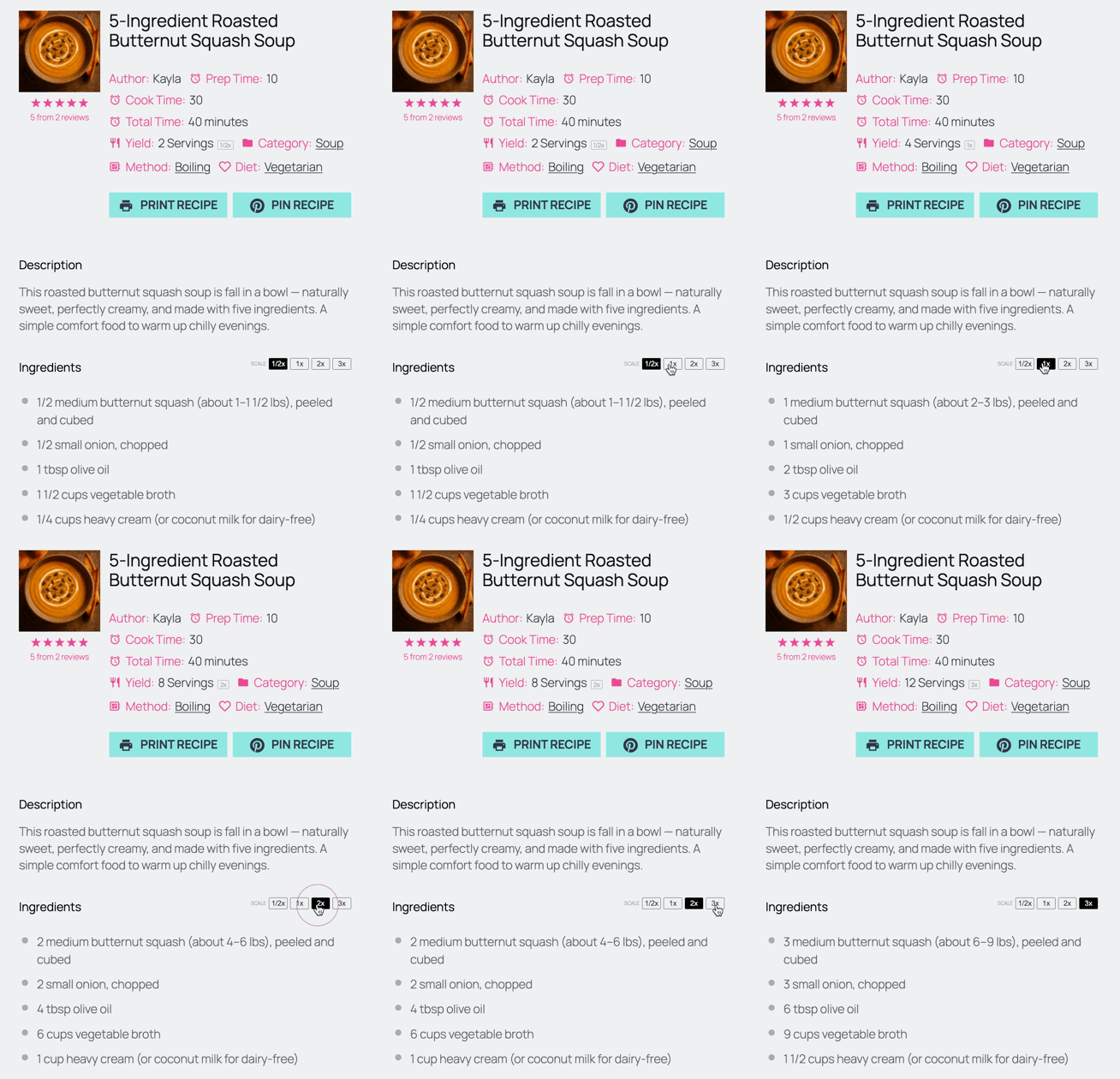
Bloggers who offer ½ scaling can capture “cooking for one” and “cooking for two” search intent without creating additional content.
One recipe, multiple audience sizes — just like the recipe below. 👇
And if you make money through Mediavine or AdThrive? Better user experience means lower bounce rates, more time on page, and stronger engagement signals. Those metrics directly impact what you earn.
How to meet smaller-household readers where they are
First, acknowledge that this audience exists. In your recipe intros, mention when a dish scales down well, or note when ingredients store easily for smaller batches. Small touches that say “I see you” go a long way.
Second, make recipe scaling effortless.
This is where a recipe plugin like Tasty Recipes comes in. Instead of asking readers to do the math themselves, you let them click a button and see adjusted quantities instantly.
No half-egg confusion. No calculator app. Just a recipe that fits their life.

Tasty Recipes’ ½ scaling feature gives readers exactly what 264,000 monthly searchers are looking for without requiring you to create separate recipes or do any extra work.
The readers who feel seen come back
When someone realizes your recipes actually work for their one- or two-person kitchen, they bookmark you. They come back. They tell their friends who are also cooking alone or cooking for two.
And those readers aren’t going anywhere. Single-person households (empty nesters, seniors living independently, young professionals) are the fastest-growing household type in America, projected to reach 30-32% by 2030.
This audience is expanding, not shrinking.
The food bloggers who recognize this mismatch now will capture that audience by adding adjustable recipes to their food blog, while competitors leave them stranded.

Common food blogger questions on “cooking for one”
- Do I need to create separate recipes for smaller portions?
-
Nope. With Tasty Recipes’ scaling feature, your existing recipes automatically adjust. One recipe serves readers cooking for one, two, or a crowd. Our support guide shows you how to scale down a recipe to ½.
- Won’t this confuse my readers?
-
Actually, it reduces confusion. Instead of asking readers to do mental math (or leave your site to find a calculator), you’re giving them exactly what they need. It’s a better experience, not a more complicated one.
- How significant is this audience, really?
-
60% of American households are one or two people. That’s the majority. If your recipes only work well for four-plus servings, you’re effectively leaving out most home cooks.
- What if some of my recipes don’t scale down well?
-
Some recipes genuinely work better at certain quantities. That’s legit. But most everyday recipes (soups, pastas, sheet pan dinners, etc) do. For the ones that don’t, Tasty Recipes lets you disable recipe scaling for specific recipes.
- Does recipe scaling work when readers print the recipe?
-
Yep. The print preview includes scaling options, so readers can tap to adjust servings before they print the exact measurements they want on paper.
- Which plans include recipe scaling?
-
Recipe scaling is included with all paid Tasty Recipes plans (Basic and up).
- Does Tasty Recipes work with my theme?
-
Tasty Recipes works with almost any WordPress theme. And if you run into any issues, there’s a 14-day money-back guarantee — so you can try it risk-free.
