
You're in a food blogging Facebook group and someone shares a screenshot: their chocolate chip cookie recipe showing up in Google with a gorgeous photo, a 4.8-star rating, and “45 min” right there in the search results. Someone in the comments mentions recipe schema.
You nod along. But honestly have no idea what it means.
So, you search for your own recipes and see plain blue links and a snippet of text.
If you're already using Tasty Recipes for your recipe cards, it's running behind every recipe you publish. If you're not, this post will get you set up in five minutes.
The 4-1-1 on recipe schema
Recipe schema is a set of behind-the-scenes labels attached to your post that tells Google: “This is a recipe. It has these ingredients, this cook time, this many calories, and 20k people gave it 4.6 stars.”
When you have recipe schema set up on your posts, Google knows what to do with your content.
When you don't, it treats your recipe post like any other webpage and starts guessing. That guessing is why some recipes show up in Google as full cards with photos, star ratings, and cook time. Others get a plain blue link.
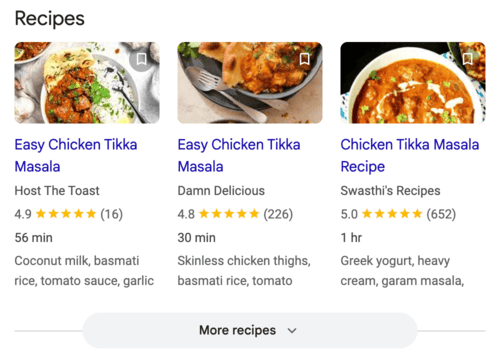
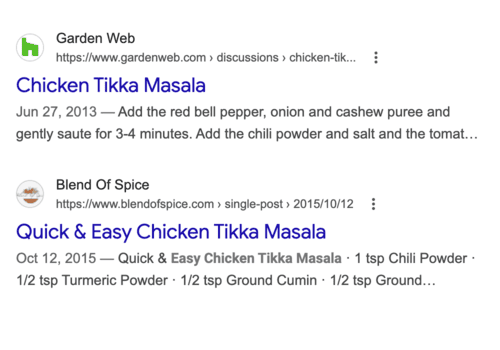
Recipe schema = the labels that make Google treat your recipe like a recipe.
Does recipe schema still matter in 2026?
Yes. Schema powers Google's recipe rich results (those full cards with photos and star ratings that dominate search), recipe carousels, and Google Discover.
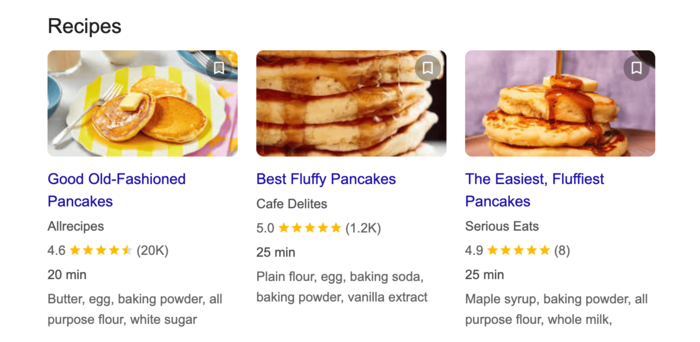
Now, it's also showing up in AI Overviews.
When Google generates an AI Overview for a recipe query, it pulls from pages with proper recipe structured data. Pages with clean schema are the ones getting cited.
Schema doesn't guarantee placement. Nothing does. But without it, you're not eligible for any of these placements.
For more on how this connects to your overall search strategy, see our guide on recipe SEO and the recipe SEO plugin that makes it happen.
How do you add recipe schema to WordPress recipe posts?
There are two ways to get recipe schema on your food blog.
Option 1: Add it manually
This means writing JSON-LD code: a block of structured data that looks like a language no food blogger should have to learn. Every field has to be formatted right. One missing bracket breaks it.
Google updates its guidelines regularly. Every time it does, that code needs updating. Multiply that by every recipe on your blog.
Option 2: Use a recipe plugin to generate recipe schema
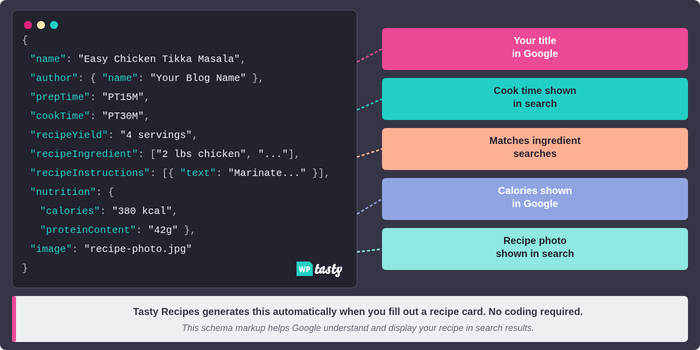
You add a recipe card to WordPress and fill the details, like title, ingredients, cook time, instructions, ratings. Then, the plugin generates all that code automatically in the background.
You never see the code. You never touch it. Every recipe you publish gets recipe schema automatically.
Option 2 is built for food bloggers. Option 1 is built for developers.
Tasty Recipes generates recipe schema automatically
Tasty Recipes is a WordPress recipe card plugin from WP Tasty, made specifically for food bloggers.
Every time you fill out a recipe card (title, description, ingredients, cook time, nutrition info, ratings), it generates the recipe schema markup in the background. No extra steps.

The reason this matters for rich results: the fields that power Google's recipe display are the fields in your Tasty Recipes card. Your recipe star ratings come from the ratings your readers leave. Your cook time shows up because you typed it in. Your photo pulls from the card image.
Tasty Recipes maps all of it to the right properties so Google can pick it up.
Tasty Recipes Lite is free. Grab it from WordPress.org to handle your recipe schema automatically. You don't need to pay for anything to get your recipes a better chance at Google's rich results.
Tasty Recipes Basic plan and above gets your recipes further in search. It adds nutrition facts, which opens doors to additional rich result info in Google. Cook Mode keeps your readers' screens on while they cook. Recipe scaling adjusts serving sizes without touching your structured data.
Caroline at Whipped the Blog saw 200% more traffic to one post after adding a Tasty Recipes card. The schema is what made that post eligible for rich results in the first place.
Generate recipe schema in 5 steps
- Download Tasty Recipes Lite for free from WordPress.org, or grab Tasty Recipes Basic for the full feature set.
- Install and activate it in your WordPress dashboard.
- Open any post (new or existing) and add a Tasty Recipes card using the block editor (+) icon.
- Fill out the recipe fields: title, ingredients, instructions, cook time. Add nutrition facts and a description if you have them. More fields means more data for Google to display.
- Publish. Your schema is live.
Make sure your schema is working with Google's Rich Results Test
Once your post is live, confirm that Google reads your schema using the Google Rich Results Test.
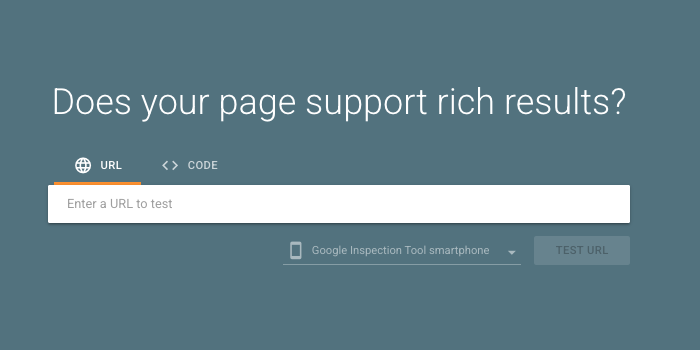
Paste your post URL into the tool and run the test. It shows what schema Google detects and flags any errors or missing fields. If everything checks out, you're eligible for rich results. If there are warnings, the tool tells you what to fix.
Your recipe won't show rich results the instant you publish. Google needs to crawl the page first. But once it does, you're in the running for the star ratings and recipe cards that get your recipes seen.
Ready to get your recipes into Google's rich results? Download Tasty Recipes Lite — setup takes five minutes.
FAQs on recipe schema
- Do I need recipe schema on my food blog?
-
If you want your recipes showing up in Google with star ratings, photos, and cook time, yes. Without schema, Google treats your recipe post like any other webpage and won't show it in recipe-specific formats. A recipe plugin like Tasty Recipes adds schema automatically every time you publish a recipe card.
- Do I need to know how to code?
-
Not with Tasty Recipes! It handles the schema automatically.
- Is Tasty Recipes free?
-
Tasty Recipes Lite is our free WordPress plugin that gives you recipe cards and schema markup.
- Why are my recipes not showing in Google?
-
The most common reason is missing recipe schema. Without it, Google treats your post like any other webpage. It doesn't know it's a recipe, so it won't show it in recipe-specific formats like rich results with photos and star ratings.
- How long does it take for schema to show up in search?
-
Google needs to recrawl your page after you add schema. For established sites, this usually takes a few days. For newer sites, longer. Speed it up by requesting indexing in Google Search Console.
- Does recipe schema improve my Google ranking?
-
Schema doesn't directly improve your ranking, but it increases your eligibility for rich results. Rich results get more clicks, and higher click-through rates signal to Google that your content matches what people are searching for.

