
You've already done the work. You have 50, 100, maybe 200 posts in your archive: recipes, tutorials, travel guides, product reviews. A roundup takes what's already there and turns it into something fresh that readers can find right now.
This post will walk you through how to create a roundup post the easy way. Especially if you’re using a WordPress roundup plugin like Tasty Roundups.
What is a roundup post?
A roundup post is a curated list of content centered around a theme: recipes, tips, tutorials, or product picks.
You might create a:
- Recipe roundup with your best one-pot meals for busy weeknights
- DIY or craft roundup with seasonal tutorials from your archive
- Holiday content roundup made up of your favorite winter recipes, travel destinations, or reader favorites
- Travel itinerary roundup for weekend getaways or national park trips
- Gear or product roundup featuring affiliate links and honest mini-reviews
- Expert roundup sharing real advice from trusted voices in your niche
Roundup posts help your readers find what they need in one place. And they put your existing content back to work.
Why creating roundup posts is worth your time
List-style posts earn more social shares and backlinks than almost any other content format, including videos, infographics, and how-to posts. If you've got 50 posts sitting in your archive, a roundup is the fastest way to make them work again.

But if you're building roundups manually, the time cost is real.
Take a “Top 10 Weeknight Dinners” roundup. Without a roundup plugin, you’re:
- Hunting down links
- Uploading each photo one by one
- Copy/pasting blurbs
- Formatting it all so it doesn’t look janky
That’s 45 minutes minimum. And that's IF everything goes smoothly.
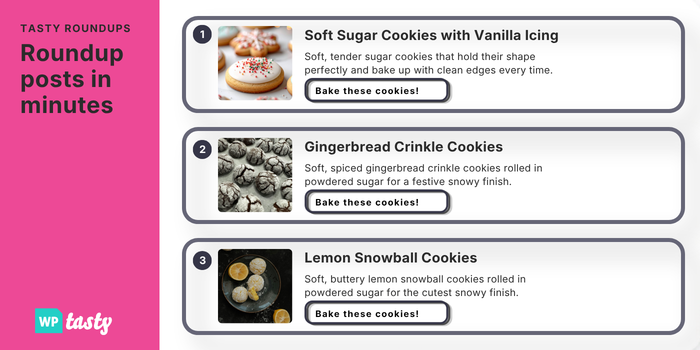
With Tasty Roundups, it’s more like 5 minutes. Search for a post, click, and the title, image, and excerpt pull in automatically.
Lori from The Kitchen Whisperer uses it to build roundups fast, pulling together burgers, brownies, and barbecue classics her readers are craving. She customizes each roundup button to say “Deliciousness Inside.” 🤤
Want to know what else Lori loves about WP Tasty? Read and watch our interview with her.
Instead of letting those recipes sit in her archive, she brings them back when readers are searching for them most.
That’s why roundup posts are worth it. They save you time and give your content a further purpose.
Want to see how they work? 👀 Watch how to create a roundup post in 2 minutes!

Tasty Roundups starts at $49/year. Try Tasty Roundups risk-free for 14 days. If it's not right for your blog, just email us and we'll refund you.
How to create a roundup post in WordPress (with internal links)
Already have a few posts around a theme? You're halfway there.
Tasty Roundups handles the other half. It pulls in your post title, image, link, and excerpt in one click. Here's how it works. ⬇️
1. Download Tasty Roundups and add it to your site
Grab Tasty Roundups, and install it like any other WordPress plugin. Upload, activate, done. If anything snags, our support docs have you covered.
2. Start a new post and add the Tasty Roundup block
Open a new post and click the [+] to add a block and search for Tasty Roundup. Then, choose the Tasty Roundup block. Not the Tasty Roundups Legacy block. (The Legacy block is the old version. You don't want it.)
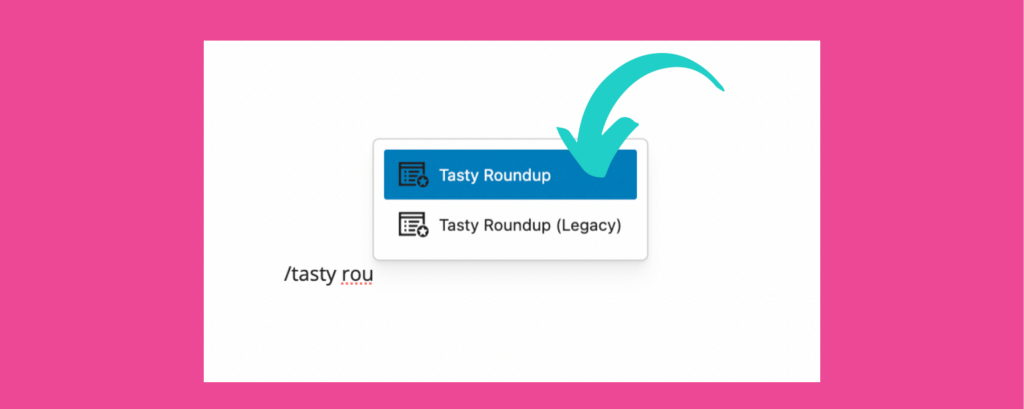
Your first card block pops into the post, ready to populate.
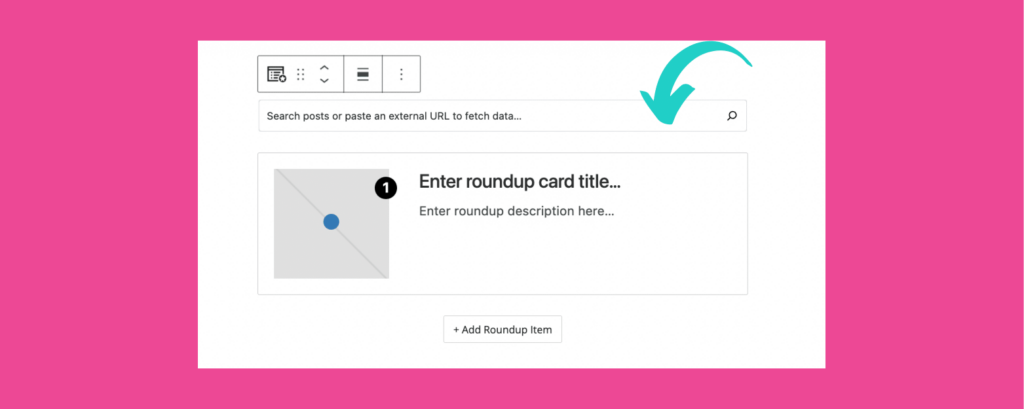
3. Search for the internal posts you want to add
Start typing a title. Matching posts appear as you type. Click to add them. The image, title, excerpt, and link all pull in automatically.
Repeat until you have everything you need.

🍭 Tasty Tip: Building a roundup around a specific cuisine, diet, or cooking method? You can search by taxonomy: type the name of a category, cuisine, diet, or tag and Tasty Roundups filters your posts instantly. No more scrolling through your entire archive to find the right recipes.
4. Edit and style your content roundup!

Rearrange the order, edit the text, or customize the button label on each card. Want “See the recipe” for a dinner roundup or “View itinerary” for travel? Up to you.
For more styling options, see our support guides on how to publish a roundup post and Tasty Roundups settings.
5. Publish your roundup post
Hit publish, pour yourself a coffee, and call it a productive blogging day! ☕️
How to create a roundup post in WordPress (with external links)
Sometimes the best roundups shine a light on other creators in your niche.
🍭 Tasty Tip: Use external links for affiliate product roundups or expert roundups. Credit your sources and keep your affiliate links current with the right link attributes.
1. Add the Tasty Roundup block
Same setup as before: add the Tasty Roundup block to your post.
2. Paste the external link
Instead of searching your own content, paste the URL of a blog post, article, or product you want to feature.
If the site supports rich data, Tasty Roundups pulls in the image, title, excerpt, and link automatically.
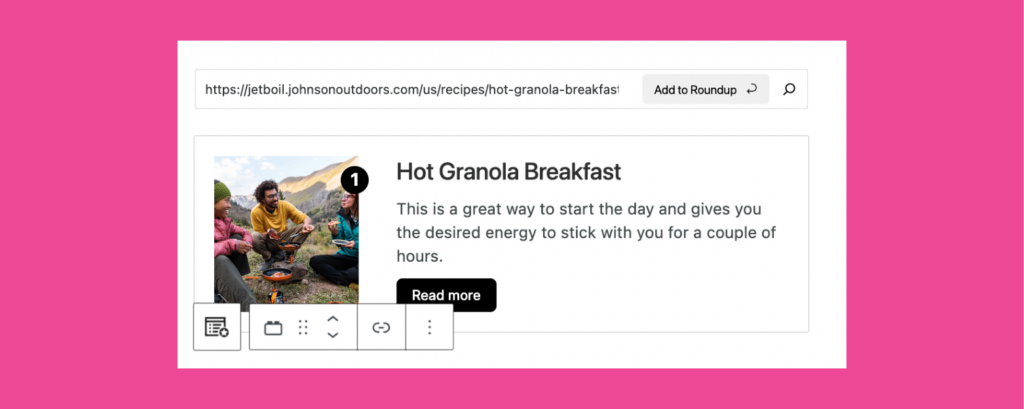
3. Add any missing details
Some sites don't share that data publicly, so you'll add the image, title, description, and link by hand. It takes an extra minute, and everything comes out looking just as clean.
Your next roundup is closer than you think
Cozy recipes, favorite tutorials, affiliate finds. You don't have to build any of it from scratch.
You've got the content. Tasty Roundups pulls it together. What took 45 minutes now takes 5. That's a roundup published this week instead of next month.
And curating helpful blog posts has never been easier to love.

FAQs on creating roundup posts
- Is creating a roundup just duplicating content? Will readers think I'm being lazy?
-
Resharing content you've already published is smart curation, not laziness. You're organizing your archive so readers don't have to hunt for your best summer salads. That's a service.
- What are the most common “roundup” mistakes?
-
Treating it like a link dump instead of a way to improve internal linking. Every item on your list should have a purpose and a short, meaningful description to guide the reader.
Other red flags: missing affiliate disclosures, mismatched or low-quality images, outdated or broken links, and generic summaries that don't give readers any reason to click.
- What are some creative ideas I could start with for roundups?
-
Think of a roundup as a content playlist: each post is a song. Here are a few to start:
Food bloggers: Cozy Dinners That Start with a Costco Rotisserie Chicken
DIY bloggers: Holiday Decor Projects You Can Make with Just a Glue Gun
Travel bloggers: National Park Itineraries Under 48 Hours
Affiliate marketers: 10 Products I Actually Bought and Loved
The best roundups are helpful, seasonal, and personal to your brand. - Can I use affiliate links in a roundup post?
-
Yes! Many bloggers use roundups to share product recommendations, and affiliate links are a smart part of that strategy. Follow disclosure rules, add the right attributes (like
rel="sponsored"), and be upfront with your readers about affiliate partnerships.
