
You joined Amazon Associates and created the content. Now you want Pinterest to send people to it.
That is, until you read a blogging forum horror story. 😱 An account banned overnight, months of commissions gone with it. So you stop, not sure if you’re one Pin away from the same thing.
You’re not. Amazon affiliate links on Pinterest are allowed. Amazon’s rules say so. Pinterest’s rules say so. The confusion comes from years of mixed signals and one rule most bloggers and creators never see written down.
This guide breaks down both policies, plus the smarter way to link once you know the rules.
- What Pinterest says you can do
- What Amazon says
- Why routing through your blog is our choice (and should be yours too)
- Before you post Amazon affiliate links on Pinterest (2 things)
- How to get Amazon affiliate links on Pinterest
- A note on Pinterest's native product tagging
- Pinterest + Amazon affiliate marketing quick tips for any niche
- FAQs: Amazon affiliate links on Pinterest
Discover Our Top 5 Tips for Optimizing your Pinterest Account
Sign UpWhat Pinterest says you can do
Pinterest’s own Commercial and Branded Content Guidelines don’t ban affiliate links.
There’s one rule. Be upfront that your content makes you money and be clear about where your links go.
That means you can paste a tagged Amazon link straight into a Pin’s destination field. Pinterest won’t remove it for that reason alone. If you skip the affiliate disclosure, or post the same Pin dozens of times to farm clicks, and that’s a different problem.
What Amazon says
Amazon’s own Associates rules say a “Site” can be your website, your app, or your social media posts. Pinterest counts.
The part that trips people up: every tagged link needs one line sitting right next to it: “As an Amazon Associate I earn from qualifying purchases.” Skip that line, and it doesn’t matter where the link lives. You’ve broken the rule either way.
The rule itself says yes, as long as you disclose. The real-world experience has been messier. In blogger forums and comment threads, some Associates have said they called Amazon directly and were told Pinterest wasn’t an approved platform for their account. That’s never appeared in Amazon’s published policy, and the answer hasn’t been consistent from one caller to the next.
Treat it as a caution worth knowing about, but not a rule to build your strategy around.
Why routing through your blog is our choice (and should be yours too)
Pinterest isn’t yours. Your blog is.
Send a Pin straight to Amazon, and Pinterest gets the click. You get the commission, if it converts. Nothing else.
Send it to your own post first, and that page is yours to build on. Ad revenue. An email list. You still get the same commission when they buy.
Before you post Amazon affiliate links on Pinterest (2 things)
Set up a Pinterest Business Account. It gets you Pinterest Analytics, ad tools, and the ability to claim your site. Converting from a personal account takes a few minutes in Pinterest’s settings.
Claim your website. This links your Pinterest profile to your domain. Your photo then shows up on every Pin that comes from your site. People notice the difference: a random link, versus a creator they already follow.
How to get Amazon affiliate links on Pinterest
Get your Amazon affiliate links
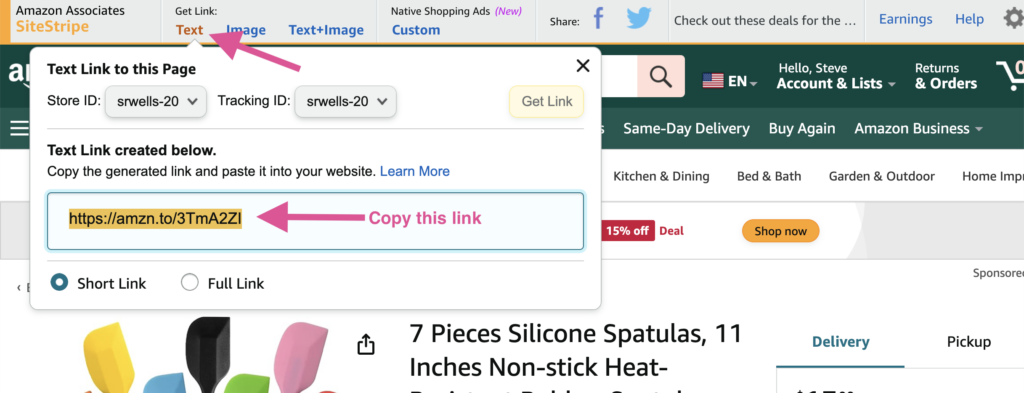
Log into your Associates account and open any product page on Amazon. A toolbar called SiteStripe shows up across the top. Click it and copy your tagged link.
A tagged link looks something like this: www.amazon.com/dp/B0ABC12345?tag=yourstoreid-20. That tag= parameter at the end is what tells Amazon the sale came from you.
Managing links across a growing site? Our Amazon affiliate plugin, Tasty Links, keeps them organized in one place instead of scattered across dozens of posts.
Set a keyword once, and every future mention of that product links automatically. Plus, you can connect your Amazon Creators API to Tasty Links to keep the freshest Amazon images on your blog.

Build out the content your links live in
Your blog posts or landing pages are where you can show off your favorite Amazon products. As long as you’re doing it in a genuine and helpful way. Don’t just stuff your posts with affiliate links.
Content types that work again and again:
- Gift guides
- Product roundups (10 Toys That Survive a Toddler)
- In-depth reviews
- How-to guides with the products within the steps
- Comparison posts
This isn’t only food-blogger territory either. A candle maker recommending wax and wicks, a travel blogger recommending packing cubes, a home organizer recommending storage bins: same format, same rules.
Run Tasty Recipes too? Drop affiliate product links right inside the recipe card. A reader can shop for your pan mid-recipe, without ever leaving the page.
Make Pins linking to your blog posts or page
Your Pin’s job is to stop the scroll, then send the click to your post. Vertical images at 1000×1500 px are the current standard.
Getting the image right matters more than anything else here. A styled shot of the product outperforms a plain white-background photo almost every time, because it looks like something a real person made.
Our WordPress Pinterest plugin, Tasty Pins, lets you set the Pinterest title and description right on the image, inside WordPress. When someone saves your Pin, they see what you wrote instead of whatever your theme grabbed on its own. You can also mark process shots and behind-the-scenes photos as non-pinnable, so only your best images ever reach Pinterest.
Disclose your Amazon affiliate links on Pinterest and publish
Amazon requires this exact phrase, visible near your links: “As an Amazon Associate I earn from qualifying purchases.” Most bloggers place it near the top of the post, above the first link.
The FTC’s endorsement guide adds a second rule. Your disclosure has to sit close to the actual recommendation. Not buried at the bottom of the page. Pinterest wants that same honesty on the Pin itself, either in the description or through Pinterest’s paid partnership tool.
Keep the language plain. “This post contains affiliate links” and “#ad” both do the job.on Pinterest.
Track what’s working (Optional)
This step is optional, but you can track conversions with the Pinterest tag.
It works like a tracking ID. You’ll see all the tracking info in your Business Account, including how each Pin is performing: impressions, clicks, saves, engagement, all of it.
A note on Pinterest’s native product tagging
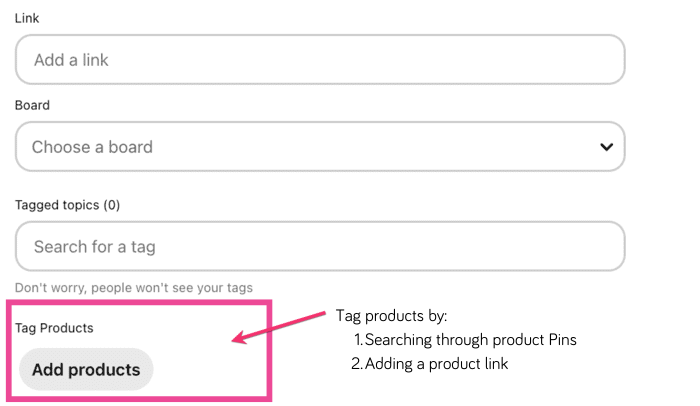
Pinterest now lets you tag products right inside a Pin.
Some affiliate programs already work with this feature. Amazon might not, at least not for every account. Check Amazon’s Associates help documentation before you use it with an Amazon link. This feature is brand new, and it’s the one spot in this whole guide where you really do need to check the current rules first.
Pinterest + Amazon affiliate marketing quick tips for any niche
- Find your land and embrace it. A board named “Things I Like” tells Pinterest nothing. A board named “Budget Kitchen Gear” or “Carry-On Only Travel” tells it exactly who to show your Pins to.
- Write your bio like a search bar. “Easy weeknight dinners and the gear worth buying” beats “Home cook, dog mom, coffee addict.”
- Organize boards by what someone’s looking for, not by when you happened to pin it.
- Pin your best images only. A blurry or dark photo won’t outperform a clear one.
- Write descriptions the way people search, not the way a press release would. “Best carry-on suitcase for a week trip to the beach” beats “premium travel essentials curated for you.”
From there, link with a plan, and let your own blog do the work Pinterest alone can’t.
FAQs: Amazon affiliate links on Pinterest
- Can I use Amazon affiliate links on Pinterest?
-
Yes, under both platforms’ current rules. Amazon’s Site definition covers social media, and Pinterest doesn’t ban affiliate links either. Most experienced Amazon associate creators still send the Pin to their own blog post first. It converts better, and you stay in control of the click.
- What does an Amazon affiliate link look like?
-
A tagged Amazon link includes a
tag=parameter with your Associate ID: something likewww.amazon.com/dp/B0ABC12345?tag=yourstoreid-20. SiteStripe builds this for you automatically. Log into your Associates account, open any product page, and it’s there. - Do I need to disclose affiliate links on Pinterest?
-
Yes. Amazon requires the exact phrase “As an Amazon Associate I earn from qualifying purchases” near your links. The FTC says that disclosure has to sit close to the recommendation, not buried at the bottom of the page. Pinterest asks for that same honesty on the Pin itself.
- What kind of content performs best for Amazon links on Pinterest?
-
Gift guides, product roundups, and how-to posts with specific recommendations built in. People clicking from Pinterest are usually deciding what to buy, so content that helps them decide outperforms a generic list of links.
- Does this work for other niches besides food blogging?
-
Yes. The process is the same whether you’re recommending stand mixers, hiking boots, or nursery furniture!
Want to get better at understanding Pinterest for your WordPress site? Sign up for WP Tasty’s Pinterest Academy! 💌 You’ll get updates with the most important strategies and tips.

